Madam,
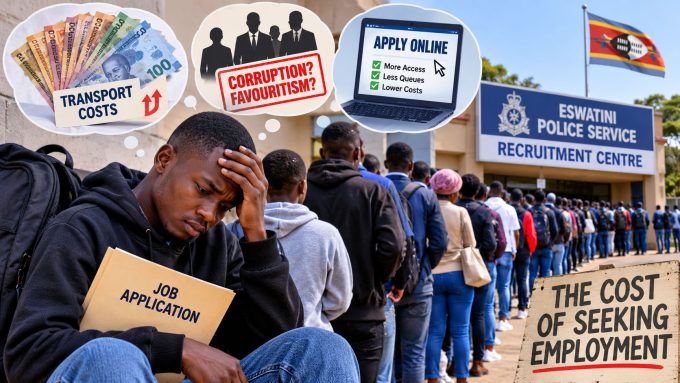
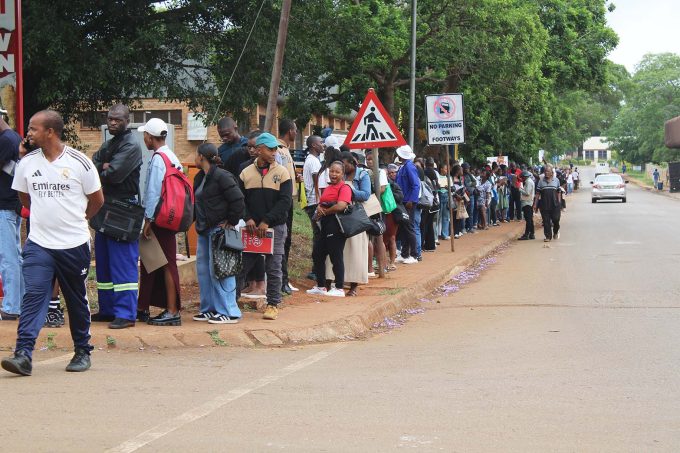
The recent, overwhelming queues of young people braving harsh conditions across the country just to scramble for a handful of police recruitment slots should not be viewed as a mere logistical spectacle. Rather, it is a glaring symptom of a deeper, systemic emergency that our nation can no longer afford to ignore. While officials and policymakers frequently point to national youth funds and various enterprise initiatives as proof that support is available, the reality on the ground tells a radically different story. For the vast majority of ordinary young people, these funds remain entirely out of reach behind an invisible wall of extreme bureaucracy.
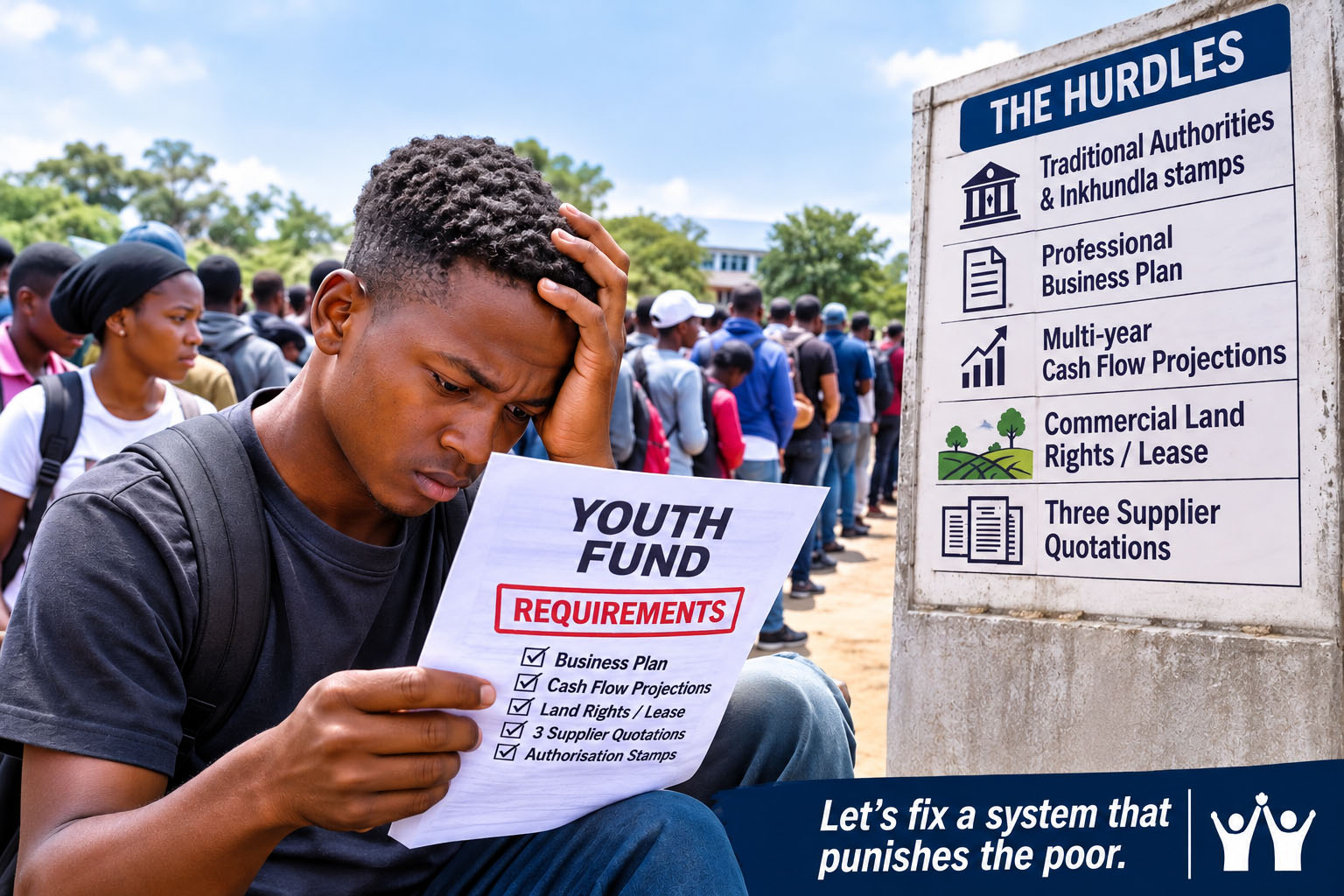
The conditions attached to these financial resources are nothing short of ridiculous for a common school-leaver or rural youth. Before an application is even looked at, applicants are forced to run a gruelling administrative gauntlet: Tracking down local traditional authorities and tinkhundla centres for stamps and endorsements, often spending scarce money on transport just to move back and forth. Worse still are the mandatory professional documentation requirements. To even stand a chance, youth are expected to submit professional business plans, multi-year cash flow projections, commercial land rights or lease agreements and—most absurdly—three distinct formal supplier quotations for every single item requested.
When you break down the numbers, the financial barrier to entry becomes clear: A young person surviving on piece-jobs must somehow scrape together E1 000 to E4 000+ just out-of-pocket for transport, document certification, printing and outsourced business plan drafting.
In short, the current system operates on a cruel paradox: You need money to prove you qualify for money.
For a young person with zero income, risking thousands of Emalangeni on an application process that rejects the vast majority of applicants is a gamble they simply cannot afford. When these applications inevitably fail due to limited fund pools, that money is gone forever, deepening their financial despair.
This explains why so many are abandoning entrepreneurship dreams and crowding into desperate queues for uniform jobs.
Young emaSwati are not sitting idle; they are deeply motivated to build and innovate. However, they are suffocating under a framework that treats support as an exclusive, expensive privilege.
If we are serious about curbing youth desperation, authorities must urgently overhaul these models. We need decentralised support desks at the community level, simplified compliance for micro-enterprises and financial frameworks that do not penalise young people for being poor.
Until the gap between policy rhetoric and economic reality is bridged, desperate queues for scarce formal jobs will remain the only lottery ticket our youth have left.
Nandi, Pigg’s Peak
Young emaSwati’s voice