

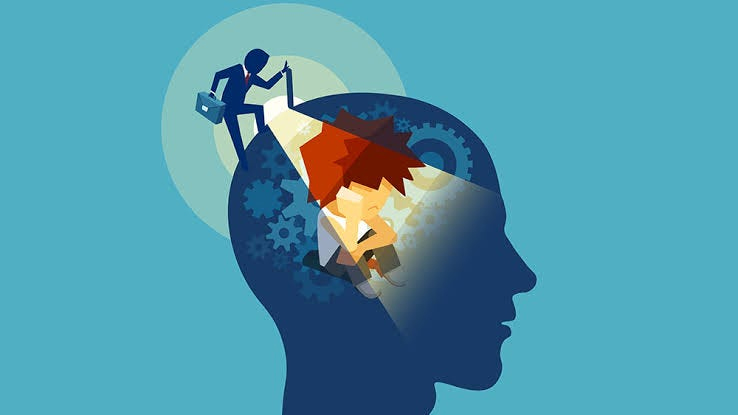
We do not come into the world as fully functioning adults, but rather as empty canvases that grow to learn everything that we now know. There comes a moment in adulthood, sometimes in your 20s, sometimes much later, when you suddenly realise that you are not just reacting to the present.
You are reacting to memories, fears and patterns you did not even know you inherited. Maybe you shut down during conflict, or you overextend yourself to avoid disappointing someone. Maybe you fear abandonment more than you admit or you feel uncomfortable receiving love because deep down, you are still trying to earn it.
The ‘inner child’ is not a poetic phrase; it is a psychological truth. Every adult carries the experiences, wounds and unmet needs of the child they once were. Those early experiences shape everything from how we love, to how we argue, to how we view ourselves. Adult behaviour is not random; it is rooted. Until we understand the roots, we keep replaying the same patterns, calling them ‘bad luck’ or ‘just how I am.’ The assumption that we have only existed as we are now keeps us stuck in habits that do not help us grow.
This means that to grow, we must acknowledge the things that have made us who we are and grown us into where we are, in order to heal the undesirable aspects. Healing your inner child is about understanding why you are the way you are and giving yourself permission to grow beyond survival mode.
Where inner child comes from
The inner child represents the younger version of ourselves, the part that learnt what was safe, what was dangerous, what love felt like and what it did not. Childhood is where we first learnt whether our emotions were welcomed or ignored. It is where we learnt whether we had to be quiet to be loved, or perfect to be accepted, or strong to avoid punishment.
Even in loving homes, children internalise powerful messages. A parent who was stressed, unavailable, overly strict or unpredictable may have unintentionally created emotional wounds. These wounds do not disappear with age. They simply become quieter, more disguised, more ‘adult.’ They manifest themselves and spill into the spaces we live in, in Church, at work and even in relationships.
A child who felt unheard becomes an adult who doesn’t know how to speak up. A child who had to be responsible too young becomes an adult who feels guilty resting. A child who didn’t feel protected becomes an adult who builds walls instead of boundaries. A child who did not receive unconditional love learns to chase it everywhere: Relationships, work, achievements and validation.
How inner child shows up in adulthood
Your inner child shows up in the moments when your reaction feels bigger than the situation. Have you ever had someone ignore your text and suddenly felt anxious or rejected? That is not just adult you. That is the child who felt forgotten. Have you ever stayed in a relationship, long after it stopped being healthy because you feared being alone? That is not weakness. That is the child who learnt love could be lost without warning. Or maybe you constantly over-explain yourself, apologise too much, or avoid confrontation. That is not personality. That is the child who learnt their voice was not safe.
Inner child wounds often appear in three areas:
- Attachment – how we connect and trust others.
- Self-esteem – how we value ourselves.
- Emotional regulation – how we handle stress, anger, fear and disappointment.
- An era of brushed off occurrences and the trauma that is perceived as another huddle to make you stronger.
Why healing matters
Healing your inner child is not about blaming parents or digging up pain for the sake of it. It is about compassion. It is about reclaiming the parts of yourself that were forced to grow up too quickly, or silenced or ignored.
Healing allows you to respond from a place of self-awareness instead of reactivity. When you heal your inner child, you set yourself up for a healthy mental state and to be healthy to those around you. Healing makes you softer and stronger without guilt or the need to overly perform. You start to see yourself not as ‘dramatic’ or ‘too sensitive,’ but as someone who learnt coping mechanisms to survive. Now, as an adult, you have the right to outgrow them.
Freedom on the other side
The moment you begin healing is the moment you stop living on autopilot. You stop repeating old stories. You stop confusing familiarity with love. You make decisions from clarity, not fear. Most importantly, you stop fighting yourself.
Healing the inner child brings you back to the version of yourself that existed before you were taught to shrink, doubt or hide. It allows you to grow into an adult who feels grounded, peaceful and emotionally free because at the end of the day, healing is not about fixing your past, but it is about giving yourself the future you deserve.



















Leave a comment