

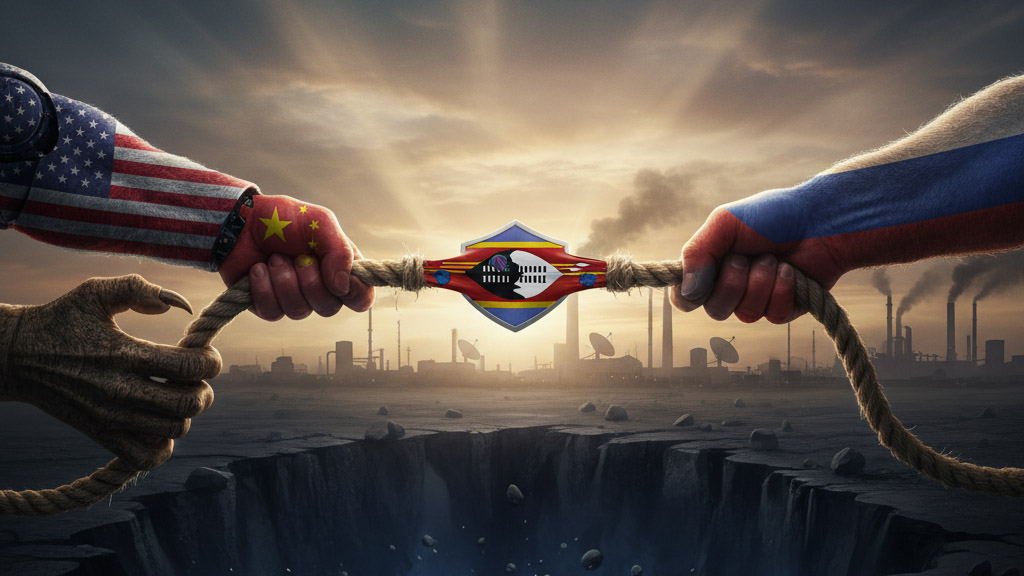
As global attention fixates on the growing tension between the United States, Russia and China -and the renewed strategic interest in places like Greenland – it is tempting for small countries like Eswatini to watch from the sidelines, believing these power struggles are distant and irrelevant.
That would be a mistake. History shows that when global giants reposition themselves, the ripples inevitably reach even the smallest and most landlocked nations.
The world is entering a new era of competition, one less about ideology and more about power, resources and strategic geography.
The United States is determined to maintain its global dominance. China is expanding its economic and political reach. Russia, isolated by sanctions, is pushing back aggressively to retain influence.
Greenland, sparsely populated and icy, has suddenly become central because of its mineral wealth, shipping routes and military value as Arctic ice melts. Control of space, sea routes, rare minerals and digital infrastructure now defines global power.
At first glance, Eswatini may appear unaffected by these developments. We have no Arctic territory, no superpower military bases, and no seat at the G20 table. Yet, our economy, diplomacy and development trajectory are deeply intertwined with the decisions made in Washington, Beijing and Moscow.
Consider trade. Eswatini relies heavily on preferential access to Western markets, particularly through agreements like AGOA with the United States. At the same time, China has become a major financier of infrastructure projects across Africa.
As relations between the US and China become more confrontational, countries like Eswatini are increasingly pressured -sometimes subtly, sometimes openly – to ‘choose a side.’
This is no longer a theoretical concern. Aid, loans, trade concessions and even diplomatic goodwill are increasingly tied to geopolitical alignment.
Then there is the issue of resources. Greenland’s importance lies in rare earth minerals – essential for electric vehicles, renewable energy technologies, smartphones and military equipment. Africa, including Southern Africa, also sits on vast mineral reserves critical to the global energy transition.
As superpowers scramble to secure supply chains, African countries risk becoming battlegrounds for influence, investment and exploitation. The question for Eswatini is not whether this competition will reach us, but whether we will be prepared when it does.
Global tensions also affect food prices, fuel costs and inflation. Wars, sanctions and trade disruptions between major powers drive up the cost of oil, fertiliser and grain.
Ordinary emaSwati feel this every time they buy bread, maize meal or fuel. When global shipping routes are threatened or currencies fluctuate due to geopolitical uncertainty, small economies suffer first and recover last.
Diplomatically, Eswatini’s traditional non-confrontational approach has served it well. However, neutrality must be strategic, not passive. In a multipolar world, small States need clear foreign policy priorities anchored in national interest.
This means diversifying trade partners, strengthening regional alliances within SADC and negotiating from a position of unity rather than isolation.
The Greenland situation offers an important lesson: Geography that once seemed irrelevant can suddenly become crucial. Climate change, technology and global competition can transform the value of land, water and resources overnight.
Eswatini must, therefore, think long-term about its own strategic assets -water, arable land, stability and human capital – and how to protect them from being undervalued or externally controlled.
Most importantly, global power struggles should remind us of the importance of internal resilience. A country divided by inequality, unemployment and weak institutions is easier to influence and exploit.
Economic self-reliance, good governance and investment in education are no longer just development goals; they are tools of national security.
As America, Russia and China wrestle for global dominance and places like Greenland become symbols of a changing world order, Eswatini cannot afford political complacency. We may be small, but we are not invisible.
The choices we make now – who we trade with, how we borrow, what we prioritise – will determine whether we remain spectators or strategic actors in a rapidly shifting global landscape.
In a world of giants, survival for small nations lies not in shouting the loudest, but in thinking the smartest.
















Leave a comment