

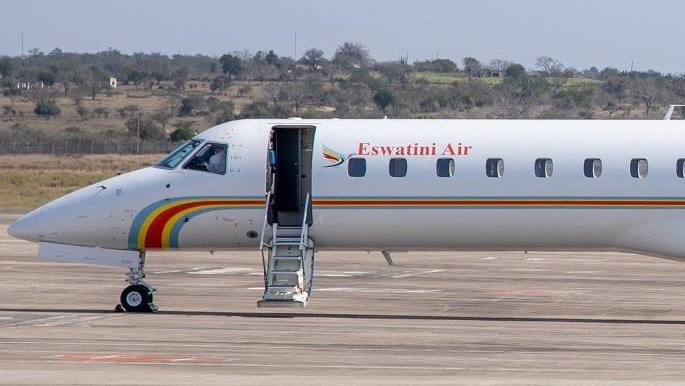
MBABANE – Beyond the disruption caused to motorists by the torrential rains, the adverse weather has restricted airspace, directly impacting Eswatini Air’s operations.
The national airline suffered the negative effects of the torrential rains and misty conditions experienced in the region, mostly in South Africa, Mozambique and Eswatini.
Royal Eswatini National Airways Corporation (RENAC) Marketing and Communications Manager Batsabile Nkambule said the effects of the torrential rains triggered several operational protocols for flight operations.
Eswatini Air is a subsidiary of RENAC.
Nkambule said: “Since passenger and employee safety is the number one priority for Eswatini Air, stringent operational procedures were applied to safeguard the well-being of our esteemed customers and workforce.”
She said the implementation of these precautionary measures entailed some unavoidable delays on three flights on the Eswatini – Johannesburg route.
“One of the occurrences led to an overnight delay. While we have managed to keep the impact of the extreme weather conditions on our operations to a minimum, we would like to take this opportunity to profusely apologise to our valued customers for the regrettable delays and inconveniences caused by the affected flights.”
Nkambule said while the costs associated with the delays were unavoidable, they were part of the budgeted amounts associated with such eventualities.
Meanwhile, across the border, the Mozambique Railways Company (CFM) suspended train services on the Ressano Garcia and Goba railway lines, which connect Maputo to South Africa and Eswatini, due to extensive flood damage.
CFM Director of Railway Operations Arnaldo Manjate confirmed the suspension to Mozambique publication Lusa, citing landslides, soil erosion and floodwaters overtopping railway platforms.
“We have experienced landslides along the Ressano Garcia line, particularly near Moamba, where floodwaters have overtopped the railway platform. We are currently opening drainage channels to allow water to recede,” Manjate said.
He explained that heavy rains had displaced ballast, rails and sleepers, causing widespread infrastructure damage. In areas such as Matola-Gare, floodwaters have submerged sections of the railway line, forcing CFM to dig drainage ditches alongside tracks.
Similar conditions have been reported on the Goba line, which connects Maputo to Eswatini, where sediment build-up and poor surface drainage have rendered the line impassable.
“These lines connect to the Limpopo railway, which links Mozambique to Zimbabwe and that line has also been affected by heavy rains,” Manjate said.
“All railway lines in the southern region are practically affected, which is why train operations have been halted. Services will only resume once weather conditions improve and repairs are completed.”
The Mozambique government estimates that 40 per cent of Gaza province is submerged. Several districts in Maputo are flooded, with at least 152 kilometres of roads destroyed. National assessments indicate that more than 3 000 kilometres of classified roads have been significantly affected.
At least 103 people have died, while over 173 000 have been affected since the start of the rainy season. More than 1 160 houses have been destroyed, with another 4 000 partially flooded.
In South Africa, severe flooding in Limpopo and Mpumalanga provinces has claimed between 30 and 35 lives, with some areas receiving nearly 400mm of rainfall in under a week.
The National Disaster Management Centre has classified the situation as a national disaster, while SANDF helicopters continue rescue operations.
Zimbabwe has recorded around 70 deaths, with more than 1 000 homes destroyed.
Regionally, food security has been threatened, with over 70 000 hectares of crops in Mozambique waterlogged. SANDF teams are assisting Mozambique with search and rescue operations as the region grapples with the escalating humanitarian and infrastructural fallout.
















Leave a comment