

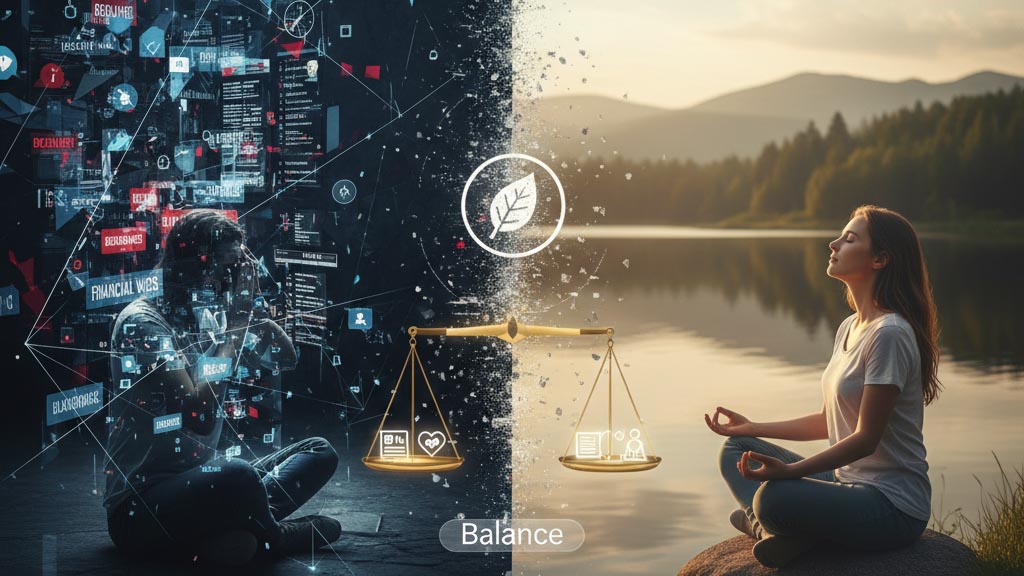
For many people today, life feels like a constant emergency. There is always something demanding immediate attention: Breaking news, personal pressures, financial worries, work deadlines or global crises unfolding in real time. Even during moments meant for rest, the mind remains alert, braced for the next problem.
This state of constant urgency has become so normalised that many no longer recognise it as unhealthy. We are living in perpetual crisis mode, and the toll it takes is deeper than we often admit. Perpetual crisis mode is not defined by one major event, but by an accumulation of smaller stresses that never fully resolve. It is the feeling of always being behind, always reacting and rarely feeling settled. The nervous system remains on high alert, interpreting everyday challenges as threats. Over time, this state becomes familiar. Stress stops feeling like a temporary response and instead becomes a default way of living.
One of the biggest contributors to this mindset is the pace of modern life. Technology has collapsed the distance between global events and personal experience. Tragedy, conflict and catastrophe reach our screens instantly, often without warning or context. While staying informed is important, constant exposure to distressing information keeps the mind in a state of vigilance.
The body responds as if danger is always nearby, even when we are physically safe. Work culture reinforces this sense of urgency. Many workplaces operate as if everything is critical and nothing can wait. Emails demand immediate responses, productivity is measured by speed, and rest is often treated as a reward rather than a necessity. This creates an environment where people feel guilty for slowing down, even when exhaustion sets in. Over time, the boundary between urgency and importance disappears, leaving individuals trapped in a cycle of constant reaction.
Living in crisis mode also affects how people relate to themselves. When survival becomes the priority, reflection feels like a luxury. There is little space to ask meaningful questions about fulfilment, purpose, or direction. Emotions are managed quickly, if at all, because there is always something else that needs attention.
This emotional suppression may seem practical, but it often resurfaces later as burnout, anxiety or emotional numbness. Relationships suffer as well. When people are constantly overwhelmed, they have less capacity for presence and empathy. Conversations become rushed, patience wears thin and misunderstandings increase. Emotional connection requires time and attentiveness, both of which are scarce in a life governed by urgency. Over time, this can lead to isolation, even when surrounded by others.
One of the most insidious aspects of perpetual crisis mode is how it distorts perspective. When everything feels urgent, it becomes difficult to distinguish real emergencies from manageable challenges. Minor setbacks feel catastrophic, and progress is overshadowed by fear of what might go wrong next. This constant anticipation of disaster erodes confidence and resilience. Instead of trusting one’s ability to cope, life becomes about avoiding collapse.
It is important to recognise that not all crises are imagined. Many people face real hardships, systemic inequalities, and ongoing instability. However, the problem arises when crisis becomes an identity rather than a circumstance. When people define themselves by survival alone, they may lose sight of joy, creativity and rest as legitimate parts of life. Surviving is necessary, but it is not meant to be permanent.
Breaking out of perpetual crisis mode does not require ignoring reality or pretending everything is fine. It begins with intentional slowing down. This can mean setting boundaries around information consumption, redefining productivity or allowing rest without guilt. Small acts of pause, moments of silence, reflection, or stillness help signal to the nervous system that it is safe to relax. Learning to prioritise is also essential.
Not everything requires immediate action, and not every problem must be solved at once. Developing the ability to sit with uncertainty, rather than rushing to fix it, creates emotional stability. Over time, this builds resilience rather than exhaustion. Living outside crisis mode allows room for clarity. When urgency loosens its grip, people can think more clearly, make better decisions, and reconnect with what truly matters. Life becomes less about reacting and more about choosing. This shift does not eliminate challenges, but it changes how they are experienced.
Ultimately, perpetual crisis mode is not a badge of strength. It is a signal that something needs to change. Human beings are not designed to live in constant survival. We are designed to experience rhythm, periods of effort followed by rest, engagement balanced with reflection.


















Leave a comment