

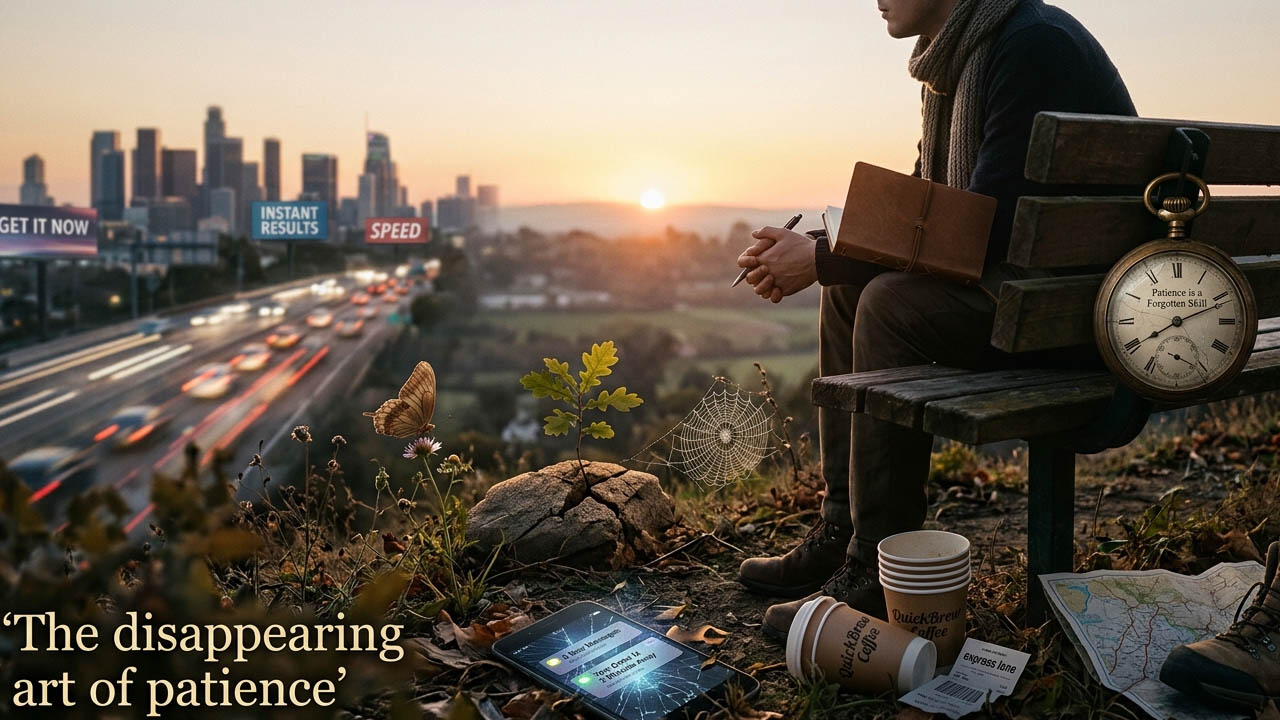
We live in a time where everything is designed to be fast. Food arrives in minutes, messages are delivered instantly and answers are available within seconds. Waiting, once a normal part of life, now feels like an inconvenience. The world has been engineered for speed and as a result, patience has slowly become a forgotten skill. What used to take time building relationships, growing careers and healing from emotional wounds, is now expected to happen quickly. We want results without delay, progress without struggle and success without the long, quiet seasons in between. When things take longer than expected, frustration replaces understanding. The idea of ‘trusting the process’ feels outdated in a culture that values immediacy.
The rise of instant gratification
At the centre of this shift is the rise of instant gratification. Technology has made it possible to access almost anything on demand. Entertainment, information, communication; all of it is available at the touch of a button. While this convenience has improved many aspects of life, it has also changed our expectations. We have become used to getting what we want when we want it. As a result, our tolerance for delay has decreased. Waiting in line feels unbearable. Slow progress feels like failure. Even personal growth, which is naturally slow and complex, is expected to produce visible results quickly. This mindset does not stay limited to small inconveniences. It spills into how we approach life as a whole.
When growth feels too slow
One of the biggest casualties of impatience is meaningful growth. Real growth, whether personal, emotional or professional, is rarely immediate. It requires consistency, repetition and time, but in a fast-paced world, slow progress can feel discouraging. People often abandon goals too early because they do not see quick results. They start something new, expect immediate success and when it does not happen, they assume they are failing. In reality, they are simply experiencing the natural pace of growth. Patience is what allows people to stay committed even when progress is not visible. Without it, consistency becomes difficult and many opportunities for long-term success are lost.
Impatience also affects how we relate to others. Relationships take time to build trust, understanding and emotional connection. Yet many people expect instant compatibility and immediate clarity. When conflicts arise, instead of working through them, there is a tendency to walk away quickly. When someone does not meet expectations immediately, interest fades. The willingness to invest time and effort into building something meaningful is slowly declining. This creates a cycle of shallow connections, where relationships are easily started, but just as easily abandoned. Patience, which is essential for deep and lasting connections, becomes rare.
Emotional intolerance and discomfort
Another consequence of losing patience is a reduced ability to sit with discomfort. Emotions such as sadness, confusion or uncertainty are often seen as problems that need to be fixed immediately. Instead of allowing emotions to unfold naturally, there is pressure to ‘move on’ quickly. However, not everything can be rushed. Healing takes time. Understanding takes time. Growth takes time. When we try to speed up these processes, we often end up avoiding them instead. This creates a pattern where emotions are suppressed rather than processed, leading to unresolved issues that resurface later. Patience is not just about waiting for external outcomes; it is about allowing internal processes to happen at their own pace.
In a fast-moving world, patience can feel like falling behind. When everyone around you appears to be progressing quickly, taking your time can feel uncomfortable. Social media amplifies this pressure by constantly showcasing milestones, achievements and success stories.
This creates the illusion that life has a timeline that must be followed. If things are not happening quickly, it can feel like something is wrong. However this perception is often misleading. Everyone’s journey is different. What looks like fast success from the outside often includes unseen struggles, delays and years of effort. Patience allows you to focus on your own path instead of comparing it to others.


















Leave a comment