

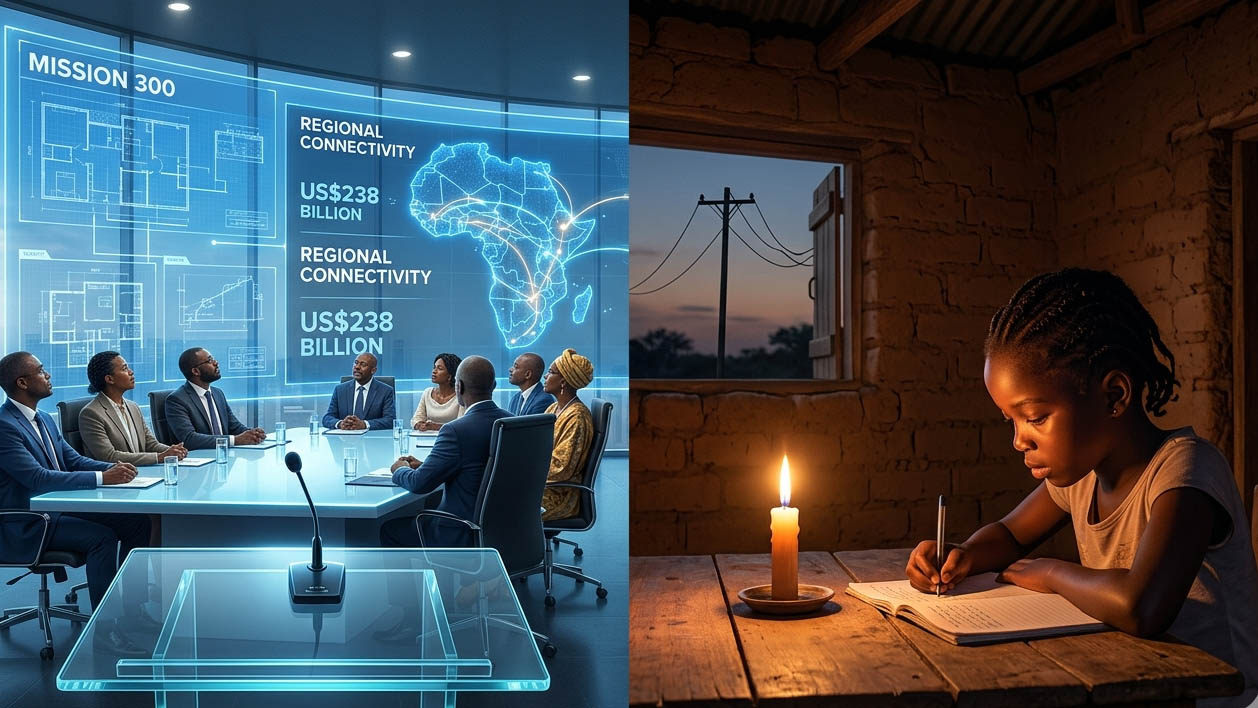
Africa has never suffered from a shortage of grand plans. From highways stretching across borders to industrial parks promising thousands of jobs, the continent has witnessed no shortage of ambitious announcements designed to transform lives. However, for millions of Africans living in darkness after sunset, promises have often arrived faster than electricity.
The latest vision is Mission 300, a programme backed by the African Development Bank and the World Bank that seeks to connect 300 million Africans to electricity by 2030. The scale of the undertaking is immense. The programme is expected to require approximately US$238 billion, with leaders now calling for African financial institutions to mobilise their own capital instead of relying solely on external donors.
On paper, the proposal appears both sensible and overdue. Africa possesses enormous financial resources. Officials note that development finance institutions collectively hold around US$250 billion, while commercial banks across the continent manage assets estimated at US$2.5 trillion. The argument is straightforward: If Africans invest more heavily in African infrastructure, development can accelerate.
However, history demands caution. The challenge facing Mission 300 is not merely financing. It is governance. The late Ghanaian diplomat and former United Nations Secretary General Kofi Annan once observed: ‘Good governance is perhaps the single most important factor in eradicating poverty and promoting development’. His words remain painfully relevant. Across Africa, countless infrastructure projects have begun with similar enthusiasm only to encounter delays, cost overruns, corruption scandals or outright abandonment.
Nigeria offers one of the clearest examples. For decades, successive governments have poured billions of Dollars into electricity generation and transmission projects. Despite enormous expenditure, the country continues to experience widespread power shortages affecting households and industries alike. Numerous investigations over the years have revealed procurement irregularities, abandoned contracts and poorly executed projects.
South Africa’s experience with Eskom provides another warning. Massive investments were directed towards the Medupi and Kusile power stations, both intended to secure the country’s energy future. Instead, years of delays, technical failures and escalating costs left taxpayers burdened while load-shedding became a regular feature of daily life. What began as a solution became a symbol of mismanagement.
Elsewhere, ambitious regional projects have struggled to deliver their promised impact. The Grand Inga hydropower vision in the Democratic Republic of Congo has been discussed for decades as a project capable of powering much of Africa. Despite repeated announcements, conferences and investment discussions, much of the vision remains unrealised.
These examples do not suggest that Mission 300 is doomed. They highlight a recurring lesson: Money alone does not guarantee development. Former World Bank President James Wolfensohn captured this reality when he famously remarked that corruption is ‘the greatest single obstacle to economic and social development’.
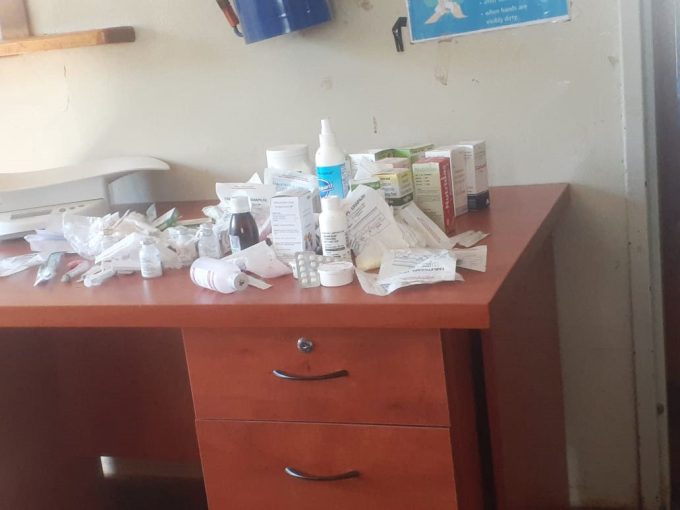
His assessment is difficult to dispute. Every Dollar lost through inflated contracts, politically connected tenders or abandoned works is a Dollar that could have connected a rural clinic, powered a school or enabled a small business to operate after dark. For ordinary Africans, the consequences are severe. Children study by candlelight. Health facilities struggle to preserve medicines. Entrepreneurs spend significant portions of their income on generators and fuel. The poor pay the highest price when infrastructure fails.
This is why Mission 300’s greatest test may not be engineering or fundraising. It may be accountability. The coalition of development finance institutions being proposed could help improve coordination and reduce duplication. Risk-sharing arrangements may also encourage private investment. These are positive developments. Investors are unlikely to commit billions if they perceive procurement systems as vulnerable to manipulation or political interference. Confidence depends on transparency.
There is also the question of timing. Connecting 300 million people in less than five years represents an extraordinary undertaking. Even under ideal conditions, energy projects require feasibility studies, environmental approvals, land acquisition processes, financing arrangements, construction and commissioning.
Many projects encounter unexpected obstacles along the way. Africa’s leaders consequently face a difficult task. They must inspire optimism without creating unrealistic expectations. Africa does not need another impressive presentation or another collection of unfulfilled pledges. It needs transmission lines that carry power, substations that function and homes that switch on their lights for the first time. The continent has heard many promises before. Mission 300 will be judged not by the billions pledged in conference halls, but by the millions of lives genuinely illuminated when the work is done.












Leave a comment