

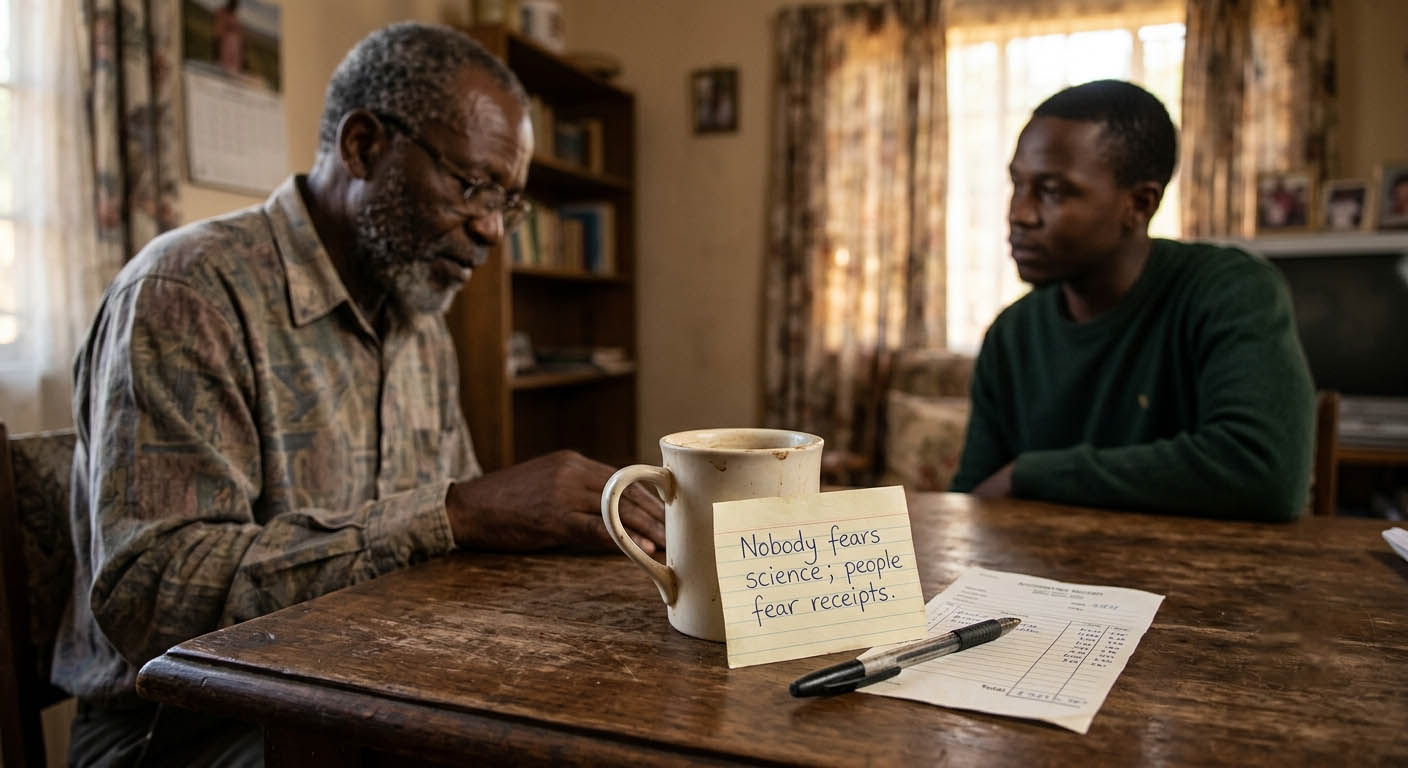
Whenever life starts making less sense than Parliament, I visit my uncle, Titus. Not because he has all the answers, but because he has travelled enough to know that every country thinks its problems are unique until you buy an airline ticket.
Uncle Titus has worked in conflict zones, served on diplomatic missions and attended enough international conferences to know that ending a civil war can sometimes take less time than agreeing on the wording of the final communiqué. His sense of humour is as dry as the African savannah.
Naturally, I asked him about Parliament’s debate on compulsory DNA testing. He didn’t even look up from his cup of coffee. “So, who is in trouble this time? The fathers or the politicians?” he quipped. “I think both,” I replied. He chuckled. “Good. Democracy is healthiest when everybody is uncomfortable.” I explained that some MPs believed compulsory DNA testing would protect innocent fathers, while others warned it could destroy marriages, infringe constitutional rights and burden the State. Uncle Titus stirred his coffee thoughtfully. “You know what fascinates me? The only people who fear audits are those who haven’t been keeping proper books.” I laughed. “No, really! A DNA test is like an accountant. It doesn’t steal your money. It simply asks why your receipts don’t match your expenses.” That one stayed with me. Parliament wasn’t really arguing about genetics. It was arguing about receipts. A DNA test doesn’t create lies any more than a bank statement creates debt. It merely reveals what was already there. I reminded him that some critics argued compulsory testing suggested society no longer trusted women.
“They’re asking the wrong question,” he replied. “So, what’s the right one?” “Why has trust become something we outsource to laboratories?” The conversation paused. Truth has a habit of doing that. It walks into the room, pulls up a chair and suddenly everyone discovers they’re thirsty. Then he smiled.“Marriage used to begin with vows. These days it begins with exchanging passwords.”
He wasn’t entirely joking. Couples now know each other’s phone PINs before they know each other’s values. Relationships have morphed into cybersecurity projects. We freely share live locations, Face IDs and cloud storage, yet somehow basic honesty remains an optional upgrade. I then mentioned the men who have unknowingly raised children for years, only to discover through DNA testing that they were never the biological fathers. One MP argued that many had suffered devastating emotional and financial consequences as a result of paternity fraud. For the first time that afternoon, Uncle Titus stopped smiling. “That isn’t only about biology,” he said quietly. “It’s about grief.”
He explained that a father is not merely the man whose DNA matches a child. A father is the man who misses work because the child has flu, teaches them to ride a bicycle, attends school meetings and pretends not to cry at graduation. “But,” he added after a pause: “There is no excuse for deceiving him. Truth delayed is still pain delivered.” I asked whether compulsory DNA testing was the answer. He shrugged. “Maybe. Maybe not. But it is definitely answering a question that should have been asked much earlier.” Given my habit of talking before I think, I blurted out: “Before pregnancy?” He nodded. “Exactly.” Then Uncle Titus did what only men who have survived decades of marriage can do. He criticised both men and women in the very same breath. “You know what I’ve learnt after 30 years of marriage? Everybody wants equality until the bill arrives. The restaurant bill. The electricity bill. The school fees. The emotional bill. Suddenly, everyone starts remembering tradition.” We both laughed, because that joke works just as well in Mbabane as it does in London, New York or Nairobi. “But let’s not pretend men are innocent either,” he countered. “Some fathers disappear faster than free Wi-Fi. They think fatherhood ends at conception. They introduce themselves to their own children like tourists visiting a foreign country.” Defensively, I quipped: “And the women?” He sighed. “Some have discovered that confusion can be profitable.” He was referring to claims raised during the parliamentary debate that some women had allegedly identified different men as fathers of the same child to obtain multiple streams of financial support. “When children become business plans, adults have already failed.” That sentence deserved its own moment of silence. I changed the subject. “What about gender-based violence?” His smile disappeared instantly.
“I’ve worked in countries recovering from war,” he said. “I’ve seen villages rebuild after bombs. What I have never understood is why some men turn their own homes into battlefields.” There was no joke this time, because none was needed. “If a man believes violence makes him powerful, he should try protecting a woman instead. That requires real strength,” he continued.
Then he looked at me and added something I hadn’t expected. “But don’t make the mistake of believing only one gender can destroy a family. A fist can destroy a family. So can a lie. A bullet can destroy a family. So can betrayal. The weapon changes, but the damage feels remarkably similar.” By then, his coffee had gone cold. Mine had too. As he stood to take his afternoon walk, I asked him for one final thought. “My boy, DNA can identify a father, but it cannot manufacture one. It can expose dishonesty, but it cannot create integrity. It can tell a child where they came from, but it cannot tell them how they should be loved.” He walked towards the gate before stopping one last time. “Oh and one more thing. Never fear the truth. Fear becoming the sort of person who needs to hide from it.”
Then the old gentleman wandered off for his sunset walk, leaving me with a cold cup of filter coffee and the uncomfortable realisation that Parliament hadn’t really been debating DNA at all.
It had been debating honesty and perhaps that’s why the debate became so emotional. After all, nobody fears science. People fear receipts.


















Leave a comment