

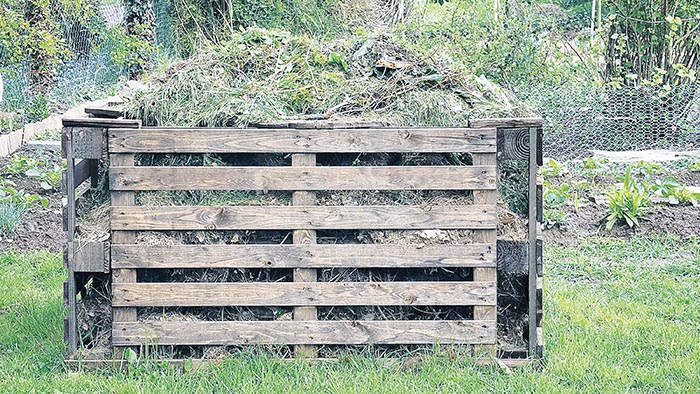
Compost is decomposed organic matter produced through an aerobic process known as composting. Soil Science and Plant Nutrition Research Officer Bongani Mvubu says this process transforms organic waste into a humus-like material that improves soil fertility, structure and biological activity.
“Composting requires active management, oxygen, moisture and heat generated by microorganisms such as bacteria and fungi. The resulting compost enhances soil physical, chemical and biological properties, including aeration, water-holding capacity and nutrient availability. It is especially valuable for improving sandy and clay soils and contributes to sustainable waste management by reducing pressure on landfills,” he said.
Importance of composting
Organic residues contain complex compounds like cellulose, lignin, proteins and lipids that plants cannot absorb directly. Composting breaks these materials down into stable nutrients that plants can readily use. Applying undecomposed residues directly to soil can temporarily lock up nutrients, reducing crop productivity. Composting therefore ensures nutrients are available to crops while protecting long-term soil health.
Advantages & limitations
Composting significantly reduces the volume and weight of waste, destroys pathogens and weed seeds and produces a stable soil conditioner. It enhances soil fertility, reduces dependence on chemical fertilisers, suppresses pests and diseases, improves crop yields and supports land restoration and pollution control. Composting can also create income and employment opportunities.
However, compost use has some limitations. It is bulky and costly to transport, has relatively low and variable nutrient content and releases nutrients slowly. Poorly managed compost may become contaminated and excessive long-term application can lead to salt or heavy metal accumulation.
Benefits of compostin agriculture
Compost is widely recognised as an effective way to improve plant health, reduce production costs, conserve natural resources and minimise chemical fertiliser use. Physically, compost improves soil structure by enhancing aggregation, aeration, water infiltration and resistance to erosion. Chemically, it increases nutrient retention, buffering capacity and provides a slow, steady nutrient supply. Biologically, compost stimulates beneficial microorganisms and earthworms while suppressing soil-borne diseases. Together, these benefits lead to healthier soils, more resilient crops and higher productivity.
Improving soil properties
Physical properties: Compost reduces soil compaction, lowers bulk density and improves root penetration. It increases water-holding capacity and infiltration, reducing irrigation needs and surface runoff. Compost also improves aeration, stabilises soil aggregates, moderates soil temperature and protects against wind and water erosion.
Chemical properties: Compost enhances nutrient-holding capacity, particularly in sandy or low-organic-matter soils, by improving cation and anion exchange. It supplies essential macro- and micronutrients and releases them gradually over time. Compost also stabilises nitrogen, reduces nutrient losses, regenerates degraded soils and buffers against acidity, salinity, pesticides and heavy metal toxicity.
Biological properties: Compost boosts soil life by supporting beneficial microorganisms and earthworms. These organisms suppress soil-borne diseases, pests and weeds through competition, natural antibiotics and pathogen predation. Sustained compost use can significantly reduce reliance on chemical pesticides.
Economic & social benefits
Composting reduces input costs for fertilisers, water and agrochemicals, while increasing the value of agricultural produce, particularly organic crops. It extends landfill lifespan, lowers waste disposal costs, creates employment opportunities and produces marketable products. Compost is also widely used as mulch, potting media and an alternative to topsoil in landscaping and land restoration.
Fundamentals & phases of composting
Effective composting depends on balancing four key components: Carbon (energy source), nitrogen (supports microbial growth), oxygen (for aerobic decomposition) and water (to sustain microbial activity). An optimal carbon-to-nitrogen ratio of about 25–30:1 promotes rapid decomposition and heat generation.
Regular turning maintains oxygen and moisture levels. Composting progresses through three phases: The mesophilic phase (initial breakdown), the thermophilic phase (high temperatures that destroy pathogens and weed seeds) and the maturation phase, where compost stabilises into a nutrient-rich soil amendment ready for use.


















Leave a comment