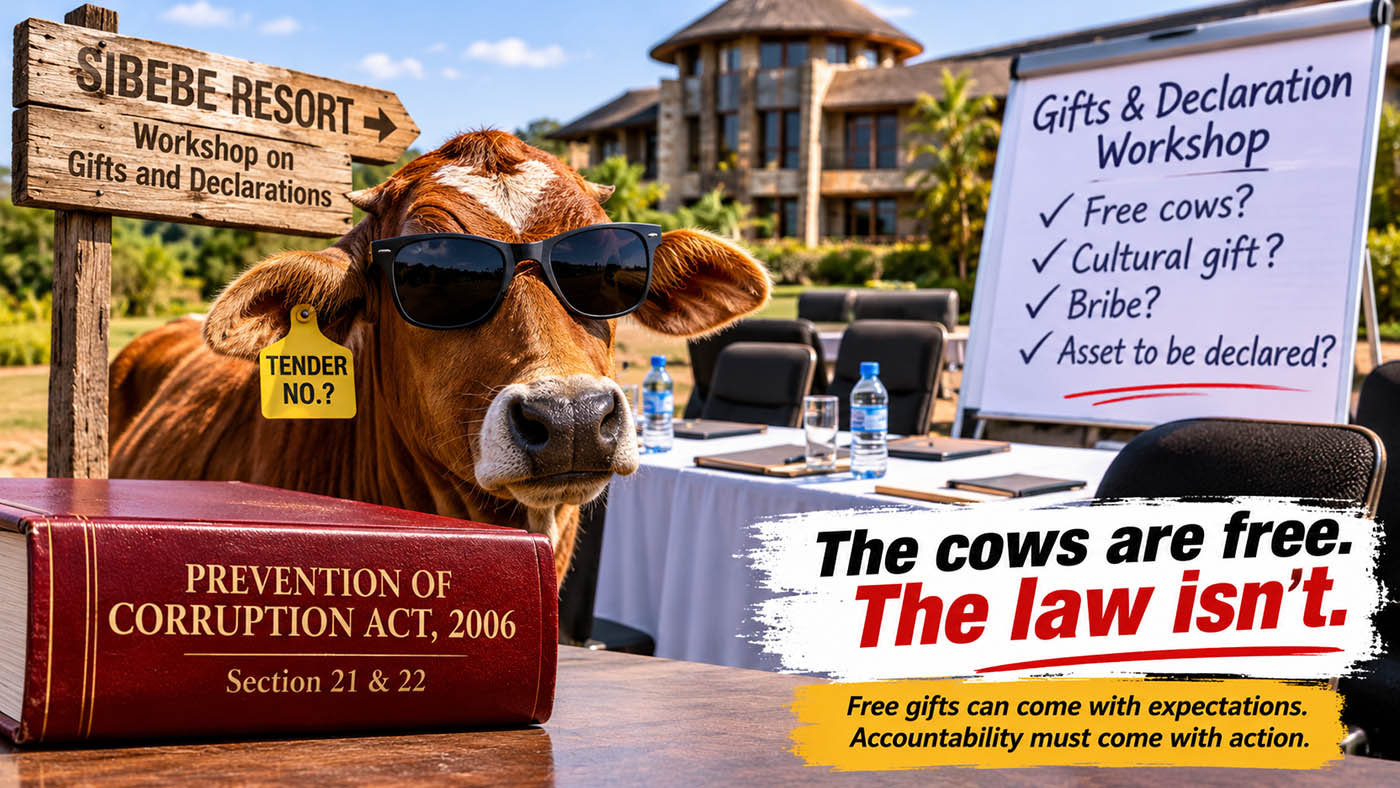
I saw pictures of our legislators at Sibebe Resort last week. Serious suits. Flip charts. Bottled water that costs more than a clinic visit.
Not at a school where the roof leaks. Not at a hospital where patients wait for treatment in the dark. At a luxury resort.
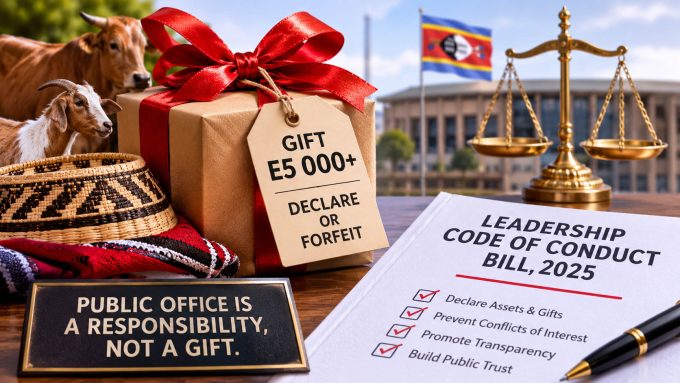
To discuss gifts. Specifically, the kind that grow legs and eat grass.
Try explaining that to your gogo.
“Gogo, Parliament is holding a workshop at Sibebe.”
“Are they buying us cows?”
“No. They’re discussing whether public officials should declare gifts.”
“Then why are they at a resort? Can’t a cow be declared from home?”
Meanwhile, ordinary people are counting coins for kombi fare and the nation is gathered around a whiteboard discussing the administrative trauma of receiving free livestock. Apparently, poverty is an emergency, but a free cow is a multi-day national seminar with lunch. That is the remarkable thing about corruption in Eswatini. It never introduces itself as a crime. It arrives wearing a tailored suit, carrying a prize bull, and whispering, ‘Please, let’s not misunderstand our relationship.’
A bribe is just a gift that went to finishing school. It learnt to say sawubona and acquired respectable manners. A cow is not automatically corrupt. If your malume gives you one for a family ceremony, that’s culture. That’s blessing.
If somebody seeking a multi-million-Emalangeni tender gives you one on a Saturday morning, that cow did not walk. It was driven. It has a tender number hidden under its tongue. One arrives with a family blessing. The other arrives with an invisible business card tucked behind its ear. Now consider the position of our legislators. They make laws governing education, health and public spending. They also scrutinise the institutions responsible for keeping them honest.
They are the players, the referees and the people guarding the vault. When spectators scream that the game is rigged, they announce a three-day workshop on the philosophical definition of a goal. And here comes the cow again. First, it’s a customary gift. armless. Moos politely. Then it’s an asset that needs a form. At this rate, the cow will soon have more paperwork than the person receiving it. Sorry, I can’t declare my assets, I was counting my cows.
Sorry, I can’t attend the oversight hearing, my car is still alive, and it had to take my free cows to be dipped.
Wait. The alive car. Yes.
We reached a stage where a photocopy is oppression and a 2013 vehicle has more rights to dignity than the photocopier. The car is alive. The cow is innocent. The taxpayer is confused and paying for both funerals.
There is a small problem with this whole cow business.
We already have the Prevention of Corruption Act, 2006. Section 21 deals with bribery, including public officers accepting advantages in exchange for official favours. Section 22 deals with corruption involving contracts and tenders. So, Parliament is discussing how to handle the cows while the law is sitting in the corner saying: “Excuse me, gentlemen. We have met before.” The beauty of the Act is it does not care whether an advantage arrives in an envelope, a luxury car or on four legs. What matters is the connection to official conduct. Corruption does not become innocent because it can moo in siSwati.
The law says: Do not accept an advantage in exchange for official action. The cow says: I am just here for the grass. Imagine being responsible for guarding the country against corruption, but you need a resort to establish whether free cows might compromise your independence. That is like appointing a burglar to chair the neighbourhood watch because he understands security challenges from a practical perspective.
A declaration system that collects forms without verifying them is not accountability. It is paperwork dressed in Sunday best. It is like asking students to mark their own exam papers.
“Did you pass?”
“With distinction, Chair.”
“Can we see the script?”
“Certainly. Please submit a written request and return after lunch.”
Rules without credible verification and consequences are not laws. They are polite suggestions to people who can afford not to hear them.
When it is reported that those tasked with checking declarations are critically understaffed, the workshop stops being a workshop. It becomes an expensive alibi.
The real feeding frenzy is not who received the cow. It is whether anyone is guarding the kraal. Every time accountability enters the room, the cow enters in a different disguise. First, it is culture. Then it is procedure. Then it is a logistical challenge. Before long, the cow will need a workshop of its own to explain why it should not be declared at all. So here is the reversal. We thought the question was whether the cow was free. The real question is why a country needs a resort to figure out that free things that come with expectations are not free. The public has already paid for the institutions, the laws, and the bottled water at Sibebe. It should not have to pay for the punchline too. And yes, ladies and gentlemen, we queued for these honourable members. In the sun. For hours. We voted. So, let the workshop answer one question before lunch: Who checks the cows?
The Prevention of Corruption Act was supposed to help public officers guard against bribery. Not leave them wondering whether the bribe has horns.