

Testicular cancer is the most common cancer affecting men aged 15 to 45 and involves a growth of cells that starts in the testicles (or testes).
Signs and symptoms of testicular cancer are usually only seen in one testicle and may include:
- Lump or swelling in testicle
- A shrinking testicle (testicular atrophy).
- Heavy feeling in the scrotum
- Dull ache in lower belly or groin
- Pain or discomfort in a testicle, scrotum or lower back
- Enlargement or tenderness of the breast
What causes it?
It starts when something causes changes to the DNA of testicle cells, which holds the instructions that tell the cell what to do. The changes cause quicker cell growth and extended living, beyond healthy cells’ natural life cycle. This causes a lot of extra cells in the testicle that can form a mass called a tumour, which can eventually grow beyond the testicle, break away and spread to other parts of the body. Testicular cancer most often spreads to the lymph nodes, liver and lungs.
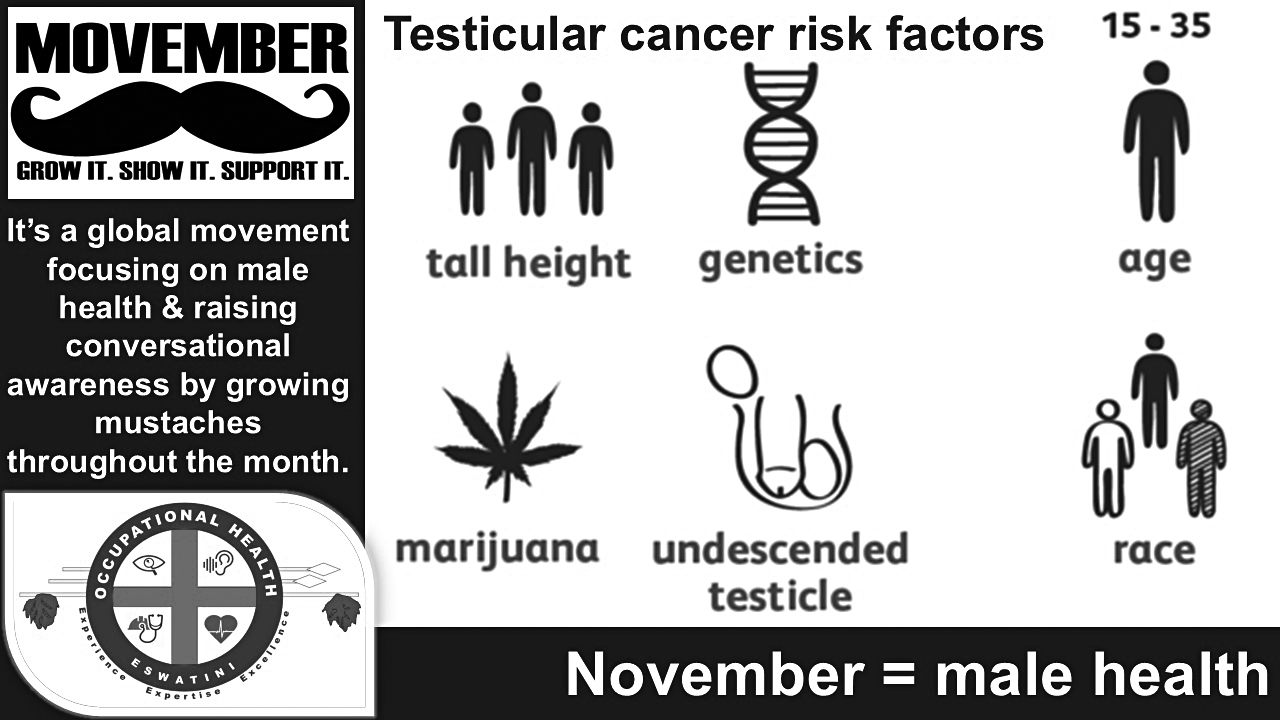
Risk factors for testicular cancer include:
- Undescended testicle. Testicles form in the abdomen of a foetus during pregnancy and usually drop into the scrotum before birth. Testicles that don’t drop are called undescended and require surgery. Being born with this condition may increase your testicular cancer risk, even after surgery.
- Family history of testicular cancer.
- Age: Testicular cancer can happen at any age. But it’s most common in teens and young adults between 15 and 45.
- Race and ethnicity: Testicular cancer is more common among Caucasians
- Smoking: Especially marijuana
- Infertility: Some of the same factors that cause male infertility may also be related to the development of testicular cancer.
Treatment of testicular cancer is very successful, especially when diagnosed and treated early. The cure rate is also very good, even when it has already spread to other parts of the body. The treatment option depends on the type of testicular cancer and how far it has spread. Common treatments include surgery and chemotherapy.
Can it be prevented?
One of the most significant steps to reduce risk of cancer is to quit smoking (first and second hand); eat a balanced diet rich in fruits, vegetables, whole grains and lean proteins; and perform early and regular self-exam screenings. Testicular self-exams are a simple and effective way to detect early signs of testicular cancer.
Here’s how:
- After bathing when the scrotum is relaxed.
- Use both hands by gently rolling each testicle between the thumb and fingers.
- Look for changes like size discrepancies, firm areas or unusual swelling.
- Check the epididymis, the soft, coiled structure at the back of the testicle is normal, but any hard lumps are not.
- Consult a doctor if you notice any abnormalities that last longer than two weeks.
Follow The Times of Eswatini (X) and dr.thys (Instagram) for more health hacks. Send queries to ohesmngr@gmail.com.



















Leave a comment