

It may sound gross, but paying attention to your bowel movements is actually important.
Your bowel habits are a strong indicator of your digestive health. Changes in the colour, shape and texture of your stool can reveal signs of infection, digestive issues or more serious health problems, such as cancer.
“Yes, you should be concerned about your bowel habits if you experience sudden or gradual changes that might indicate an underlying health condition. Bowel or colon cancer is one reason why you should always pay attention to your stool.
“This cancer begins in the large bowel, which is made up of the colon and rectum. Often, the major sign of colon cancer is changes in your poo, however, it could be a sign of other conditions as well,” said Dr Michael Hlophe, answering the probing question.
“Stool may indicate of a health problem if someone notices a change in their bowel habits with constipation or diarrhoea or notices a change in colour of their stools. There may also be a problem if a person has signs or symptoms of not feeling well, which could include abdominal discomfort, nausea, change in appetite or change in weight,” he continued.
But how can you determine if your stool is healthy?
According to the Dr, healthy stool is usually considered a soft, formed bowel movement that is typically brownish in colour.
Faecal matter is 75 per cent water and 25 per cent solid matter, consisting of dead bacteria, indigestible food and inorganic substances. It usually takes about three days for food to pass through your system, resulting in a bowel movement. But when food passes through your system too quickly or too slowly, it can affect the size, colour and texture of your stool.
The Bristol Stool Scale
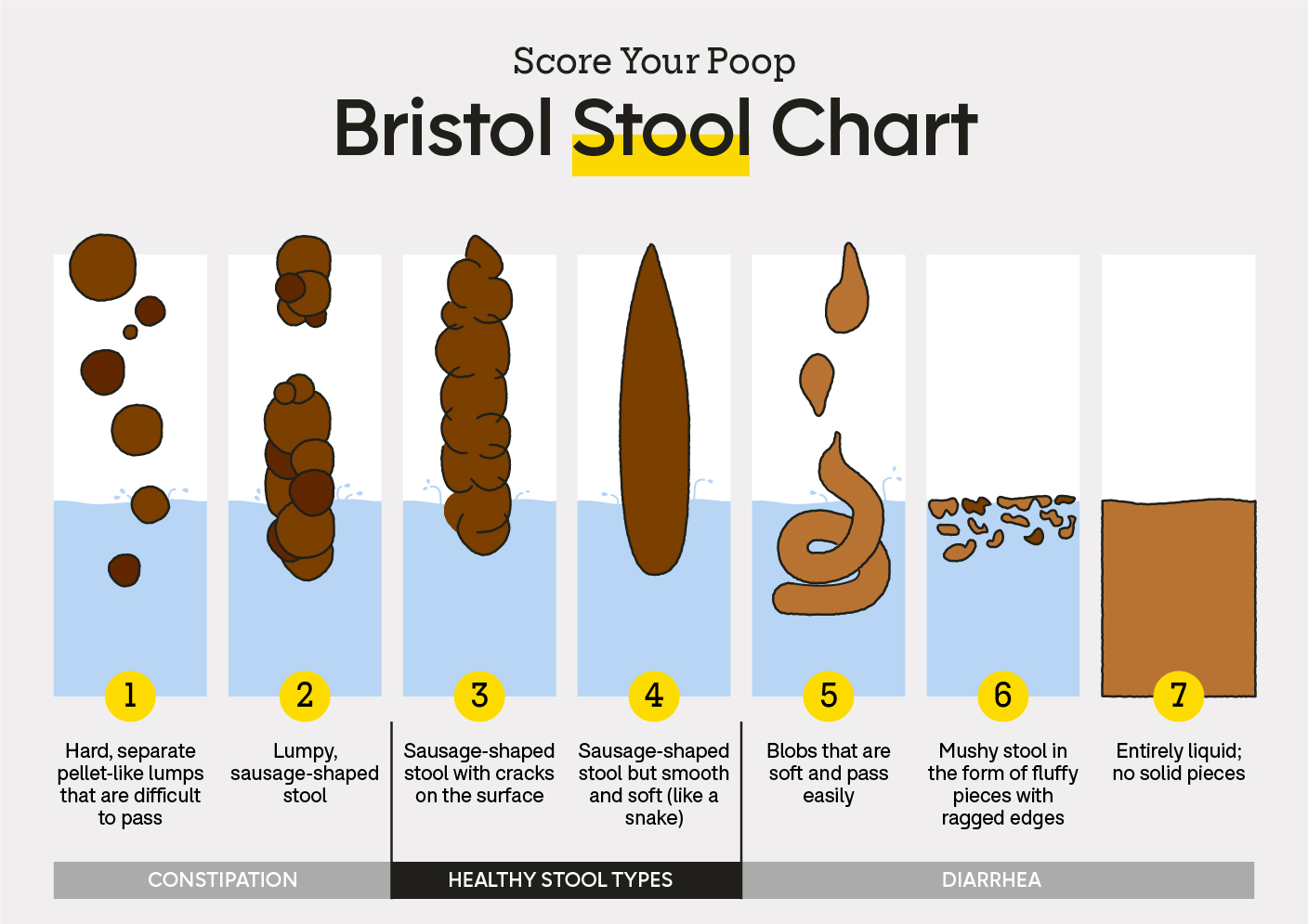
The Bristol Stool Scale classifies stool types into seven categories based on size and texture.
Signs of constipation: Types 1 and 2 are hard and lumpy, and painful to pass. These stools have been sitting in the large intestine and colon for a long time and are indicative of someone who may be constipated. Constipation can be caused by many factors, including medications, dietary changes, stress or medical illness.
Signs of healthy digestion: Types 3 and 4 are considered the optimal form of healthy stool. Healthy stool is typically sausage-shaped and snake-like. It is easy to pass and remains intact when flushed.
Signs of diarrhoea: Stool types 5 through 7 are watery and mushy. These stools are in the large intestine and colon for the least amount of time and may present as diarrhoea. Diarrhoea can also be caused by many factors including medications, dietary changes or intolerance, stress, medical illness and infections.
The colour of your stool can also be a reflection of your overall health. “Healthy stool is usually brownish in colour,” Dr Hlophe mentioned.
“There is cause for concern when stool is black or reddish, which may be indicative of gastrointestinal bleeding. Stools that are grey may also be concerning for liver problems.”
Yellow, greasy, foul-smelling stool indicates that the intestines didn’t properly digest and absorb fat. This could be caused by a disease of the intestinal lining, such as celiac disease or chronic pancreatitis.
Tips for maintaining healthy bowels
It’s important to maintain good bowel health, as 70 per cent of the body’s immune system is contained within the digestive tract. To keep your bowel movements frequent and healthy, follow these tips:
Eat a balanced, high-fibre diet. Fibre can help prevent or relieve constipation.
Try fibre-rich foods like apples, carrots, beans and whole wheat cereals.
Exercise regularly. Exercise can decrease the time it takes for food to move through the large intestine, helping with constipation.
Get a colonoscopy. Colonoscopies allow doctors to look for polyps inside the colon and rectum, which could be an early sign of cancer. Schedule a screening if you:
- Are 45 years old or older
- Have a personal history of inflammatory bowel disease
- Have a family history of colon cancer
Stay hydrated. Water helps to clear toxins from the body. Try to drink at least eight-ounce glasses of water a day.


















Leave a comment